Sofia Butler · 21 October 2026
Violet Sheen Patterns Observed in Fermented Botanical Extracts During Traditional Dyeing Processes Across Southeast Asian Textile Communities
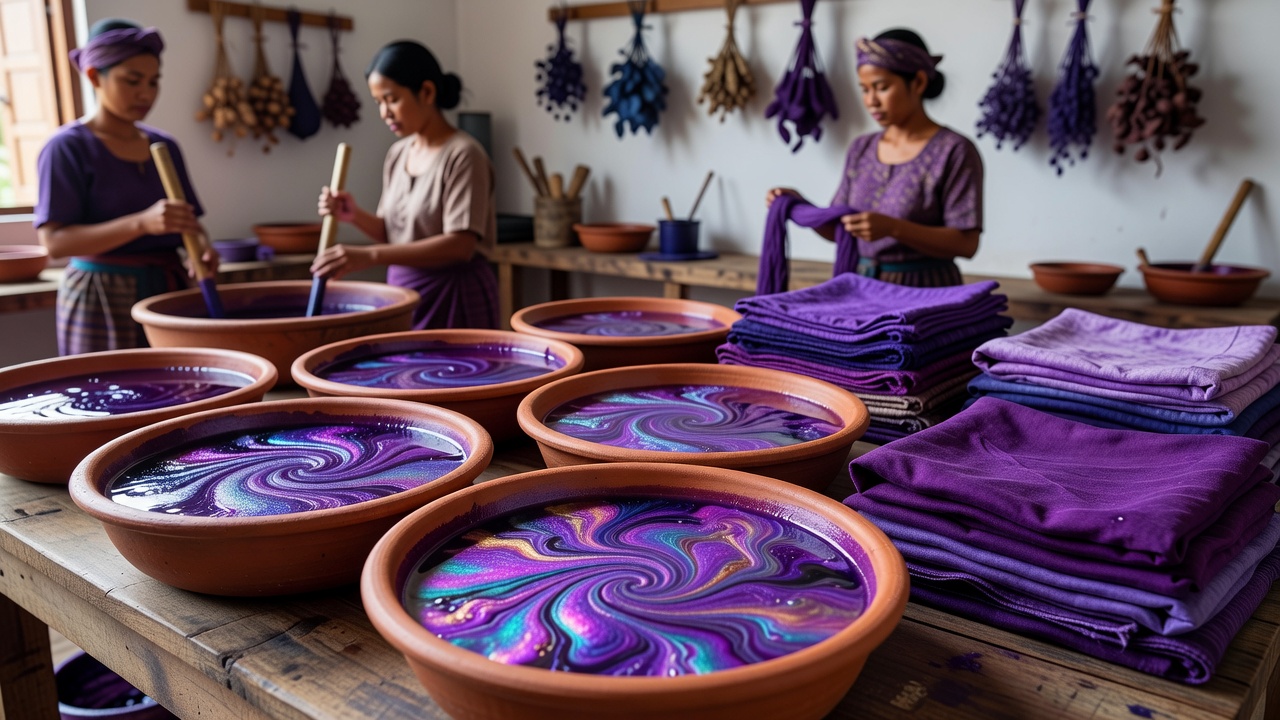
Communities across Indonesia, Thailand, Vietnam, and the Philippines have documented violet sheen patterns that form when botanical extracts undergo fermentation before application to textiles, and researchers note these patterns arise from interactions between specific plant compounds and microbial activity during controlled anaerobic periods that last several days to weeks. Observers in these regions report that the sheen appears as iridescent layers on the surface of the dye bath, often shifting from deep purple to metallic violet depending on the duration of fermentation and the type of vessel used for the process.
Botanical Sources and Preparation Methods
Traditional practitioners select leaves, roots, and bark from plants such as Strobilanthes cusia in Vietnam and Indigofera tinctoria in Indonesia, then crush and mix them with water before sealing the mixture in earthenware or wooden containers where natural yeasts and bacteria initiate fermentation. Data from field studies conducted by the National University of Singapore indicate that temperature ranges between 25 and 32 degrees Celsius accelerate the breakdown of indican into indoxyl, which then oxidizes to produce the precursor compounds responsible for the violet reflection observed later in the dyeing sequence.
Fermentation Dynamics and Sheen Formation
During fermentation the pH drops gradually from neutral to around 4.5, and this acidification allows certain polyphenolic compounds to stabilize in forms that create the characteristic sheen when the extract contacts oxygen during the dyeing stage. Those who monitor the process in textile villages note that agitation at specific intervals prevents excessive sediment buildup while permitting the development of thin surface films that refract light in violet wavelengths. Evidence collected over multiple harvest cycles shows that extracts fermented for nine to twelve days consistently yield stronger sheen intensity than shorter batches, although longer durations beyond fifteen days can lead to duller tones as secondary metabolites accumulate.
Regional Variations Across Southeast Asia
In northern Thailand, weavers combine fermented indigo extracts with tannins from local acacia species, resulting in sheen patterns that exhibit sharper edges and more defined geometric motifs on silk yarns. Philippine communities on the island of Mindanao incorporate coconut water into the initial mix, and this addition introduces additional sugars that modify microbial populations and produce broader, cloud-like violet sheens that spread across cotton fabrics. Vietnamese artisans working near the Mekong Delta maintain records showing that seasonal humidity levels above 80 percent during the fermentation window enhance the depth of the sheen, while drier conditions require adjustments in vessel sealing techniques to retain moisture.
Observations Recorded in October 2026
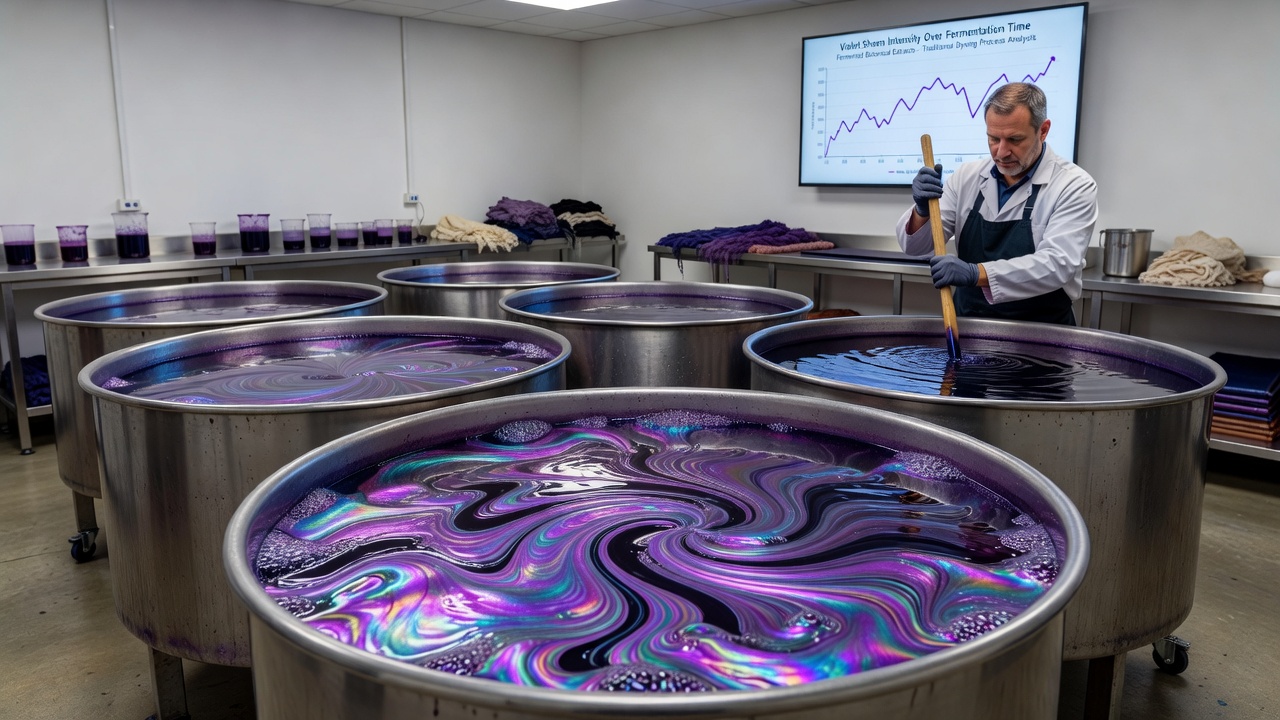
In October 2026 field teams visiting multiple sites documented consistent correlations between fermentation vessel material and sheen uniformity, with clay pots producing more even violet layers than metal containers that conducted heat too rapidly. Researchers affiliated with the Commonwealth Scientific and Industrial Research Organisation compiled comparative samples from these visits and confirmed that microbial diversity within the extracts directly influences the refractive index of the resulting films. These findings align with earlier reports from textile cooperatives that have tracked sheen characteristics across successive dyeing seasons without external chemical additives.
Analytical Techniques and Community Documentation
Local artisans employ visual assessment methods refined over generations, comparing sheen against standardized reference swatches prepared from previous batches, while laboratory analysis using spectrophotometry has quantified the peak reflectance at wavelengths between 420 and 450 nanometers for extracts that display the strongest violet effects. Community workshops in Java have begun digitizing these reference sets to preserve knowledge of optimal fermentation endpoints, and cross-regional exchanges allow practitioners from different islands to compare outcomes under varying monsoon conditions. Such documentation efforts reveal that the violet sheen functions as a practical indicator of dye readiness rather than a decorative element alone.
Conclusion
Traditional dyeing communities continue to refine fermentation parameters based on observable sheen characteristics, and ongoing documentation supports the transmission of these techniques to newer generations of textile workers. The patterns remain tied to specific botanical combinations and environmental factors that vary by location yet share common microbial pathways across Southeast Asia.