Rosa Lang · 7 October 2026
Analyzing temperature effects on violet sheen durability in automotive paint finishes
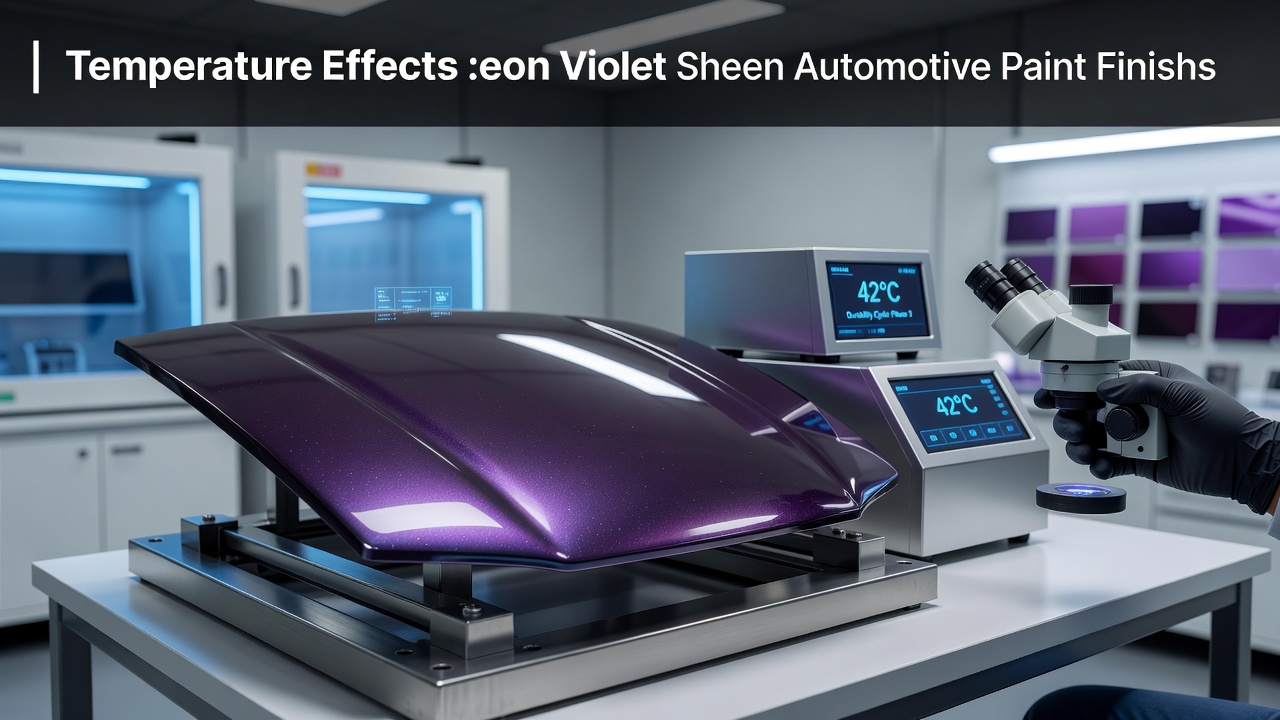
Automotive manufacturers have long examined how temperature variations influence the longevity of specialized paint finishes, particularly those incorporating violet sheen pigments that create distinctive visual effects on vehicle surfaces. These pigments often consist of interference particles that shift in appearance based on light angles, yet they remain sensitive to thermal stress during both application and long-term exposure. Data from coating laboratories indicate that repeated cycles of heating and cooling can alter the molecular structure of these particles, resulting in reduced reflectivity and eventual fading of the sheen layer. Researchers track these changes through accelerated weathering protocols that simulate real-world conditions across multiple climate zones. Studies conducted at facilities in North America and Europe demonstrate that temperatures exceeding 80 degrees Celsius accelerate oxidation processes within the clear coat overlying the violet pigments, while subzero conditions promote micro-fractures that allow moisture intrusion and further degradation. Observers note that modern formulations incorporate stabilizers designed to mitigate these effects, although performance varies depending on the specific binder resins and cross-linking agents employed during production.Key Mechanisms of Temperature Impact
Thermal expansion and contraction represent primary factors that affect sheen durability, as the different layers within a paint system expand at unequal rates and create internal stresses. When ambient temperatures rise sharply, the violet interference flakes may migrate slightly within the base coat matrix, disrupting the precise alignment required for consistent light reflection. Conversely, rapid cooling causes the surrounding polymer to contract more quickly than the embedded particles, leading to delamination risks over successive seasons.
Evidence from long-term exposure tests shows that vehicles operating in desert regions experience faster sheen loss compared to those in temperate zones, with measurable drops in gloss units recorded after three to five years of service. In October 2026, updated climate modeling from the Australian Department of Climate Change, Energy, the Environment and Water highlighted how increasingly frequent heatwaves intensify these patterns across southern hemisphere markets, prompting refiners to adjust additive packages accordingly.
Testing Protocols and Industry Data
Standardized evaluations rely on thermal cycling chambers that alternate between extreme highs and lows while monitoring color shift values and sheen retention metrics. Engineers at major coating suppliers apply spectrophotometric analysis at regular intervals to quantify changes in the violet wavelength range, generating datasets that inform warranty projections for fleet operators and individual consumers. One study released by the University of Toronto's Advanced Coatings Research Group revealed that incorporating ceramic nanoparticles into the clear coat layer extended sheen integrity by up to 40 percent under repeated 70-degree Celsius exposure cycles.
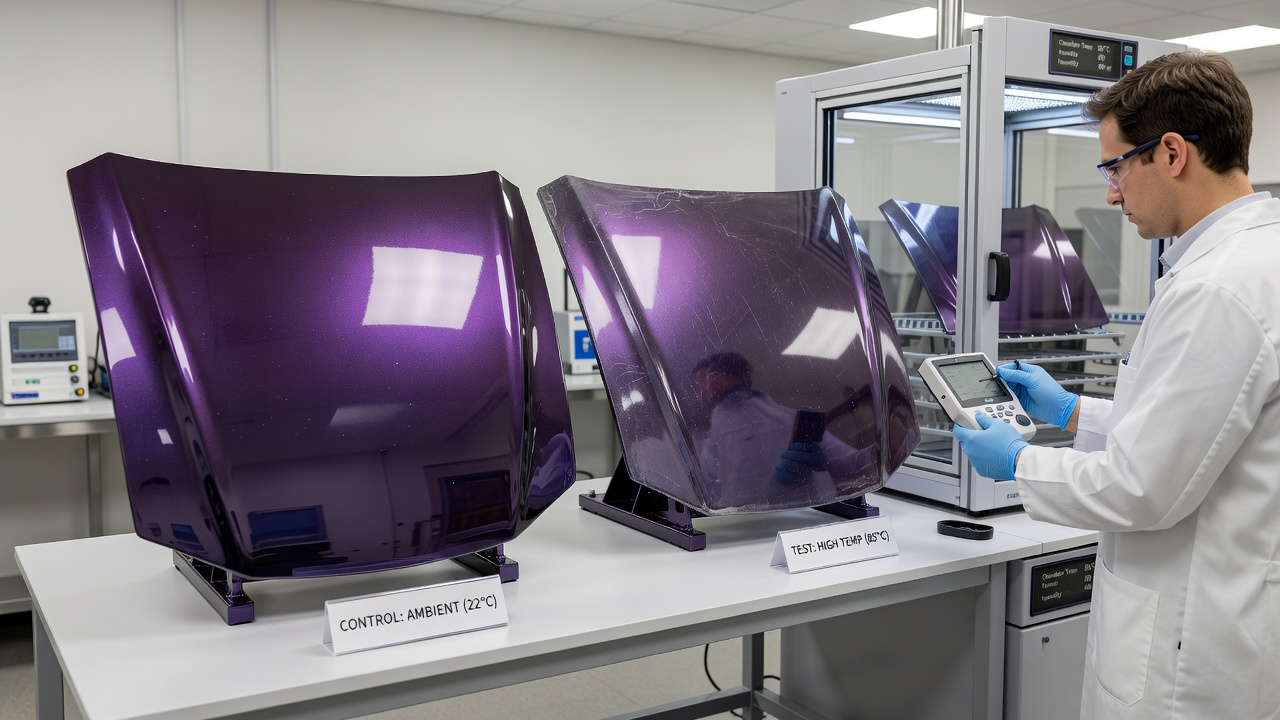
Additional findings from the European Chemicals Agency's 2025 technical report on automotive surface treatments emphasize the role of UV absorbers working in tandem with thermal stabilizers, noting that synergistic combinations deliver superior resistance when vehicles encounter combined heat and solar radiation. Fleet maintenance records from commercial operators in the southwestern United States further support these observations, documenting that vehicles stored under reflective covers retained higher sheen levels than those left exposed during summer months.
Regional Variations and Formulation Adjustments
Paint suppliers tailor violet sheen formulations differently depending on target markets and their prevailing temperature profiles. In northern European climates, where winter lows dominate, manufacturers prioritize flexibility enhancers that accommodate contraction without cracking the interference layer. Southern regions require higher concentrations of heat-resistant resins to counteract softening of the binder during prolonged hot periods. Comparative analysis across these geographies indicates that no single formulation performs optimally everywhere, leading suppliers to offer climate-specific product lines.
Those who've studied pigment behavior across seasons recognize that humidity often interacts with temperature to compound effects, though the core driver remains thermal fluctuation. Automotive assembly plants located in variable environments now integrate real-time monitoring during curing stages to ensure the violet layer achieves proper cross-link density before vehicles leave the facility.
Conclusion
Analysis of temperature effects on violet sheen durability continues to guide material selection and application techniques within the automotive sector. Ongoing research supplies manufacturers with precise data on pigment stability limits, enabling refinements that extend service life across diverse operating conditions. As climate patterns shift, these insights remain essential for maintaining finish performance on vehicles worldwide.